

Licensed Clinical Social Workers in Pinehurst, NC
Therapy plus care navigation, for the whole picture of someone's life.
29 providers in Pinehurst
A licensed clinical social worker provides talk therapy and, distinctively, helps you navigate the services around it, from benefits to housing to coordinating other providers. LCSWs are not prescribers, so when medicine is part of the plan they coordinate with one. MedlinePlus says to contact your primary care provider if you are unsure where to start.
In Pinehurst, NC, ProviderQuoHealth lists 29 licensed clinical social workers. Nearby: Southern Pines, NC and Aberdeen, NC.
Finding a licensed clinical social worker in Pinehurst, NC
Pinehurst is the Moore County anchor of the Sandhills, a market with one of the largest retirement-age patient populations in North Carolina. FirstHealth of the Carolinas operates the regional system from Moore Regional Hospital, and the surrounding area carries a dense concentration of specialty practices supporting older adults: cardiology, orthopedics, urology, ophthalmology, and behavioral health among them.
What does a Licensed Clinical Social Worker do?
Licensed Clinical Social Workers (LCSW, LICSW, or LCSW-C depending on the state) provide talk therapy for the same range of concerns most counselors and psychologists do, including anxiety, depression, grief, trauma, relationship issues, and life transitions. What tends to set social work apart in practice is an emphasis on connecting people with the community and support services available to them, alongside the therapy itself. License titles and requirements for clinical social workers are set state by state, so check the credential shown on the profile.
In practice that means an LCSW often does two things at once: therapy, and care coordination. Alongside the counseling, many help clients access housing or food programs, connect with disability or benefits services, work with school systems, or coordinate between medical and behavioral-health providers. That practical layer can make a real difference in care continuity, especially for anyone juggling a complicated situation.
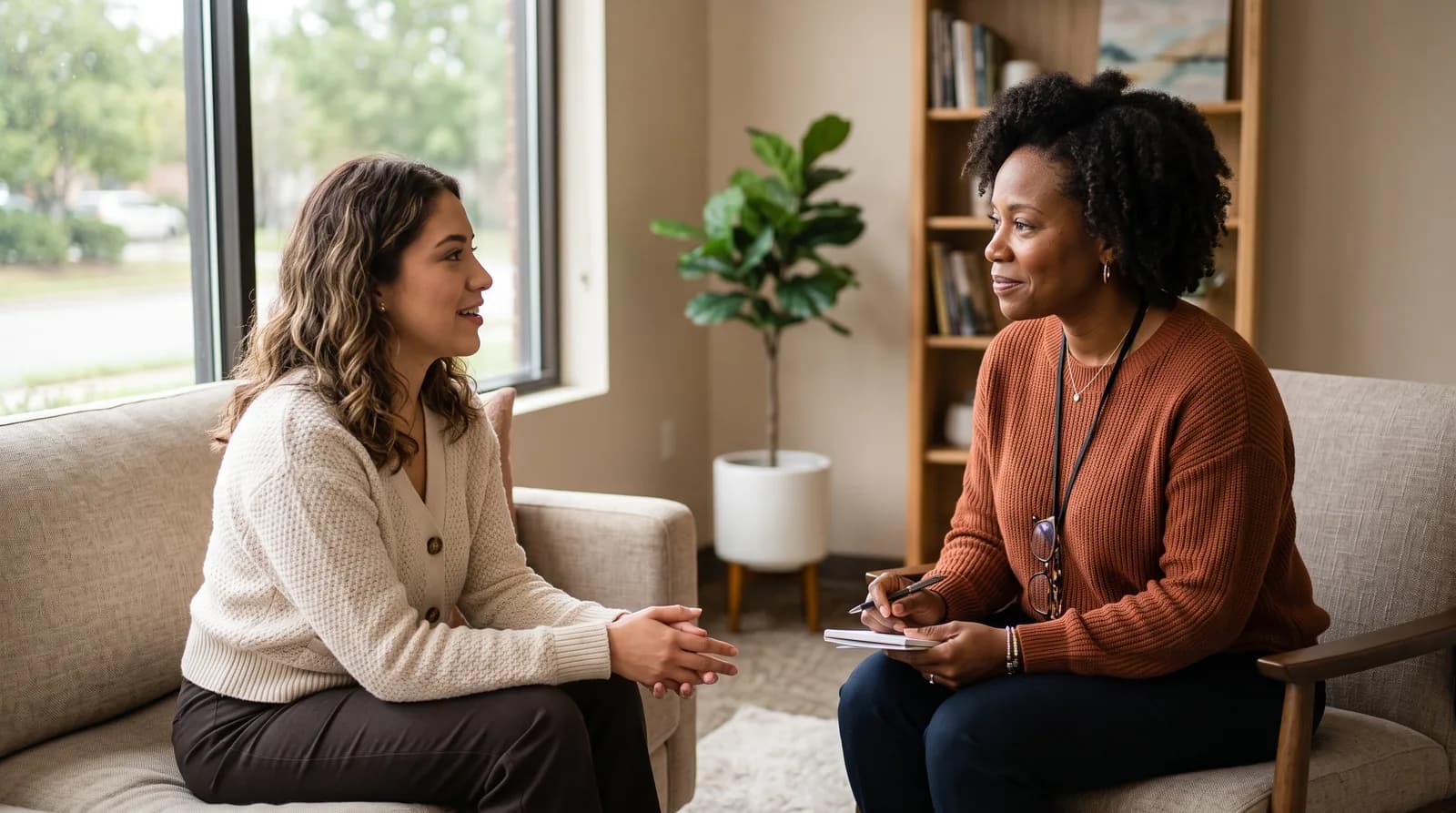
How an LCSW can help
For the therapy itself, the evidence is reassuring: the American Psychological Association describes psychotherapy as an effective treatment, and the NIH's National Institute of Mental Health notes that evidence-based therapies have been shown to reduce symptoms of depression, anxiety, and other conditions. Many LCSWs work in structured, evidence-based approaches such as cognitive behavioral therapy. When medication is also part of the picture, an LCSW coordinates with a prescriber rather than prescribing.
The care-navigation side is where social work's training really shows. If your stress is tangled up with practical pressures, a new-to-town move, a benefits problem, a child's school situation, or coordinating care across several providers, an LCSW is often often a good person to ask to help you work both problems at once. For families managing a lot of moving parts, that combination of a listening ear and a practical hand can be the difference between coping and getting ahead of it.

What to expect at your first visit
A first session is mostly conversation. Your LCSW will ask what brought you in, take a history, and talk through your goals, both the emotional ones and any practical needs, before suggesting a direction. From there you get a working plan, and if part of that plan is connecting you to outside resources, a good LCSW will help you take those steps rather than just handing you a list.
How long you work together depends on the goal. Some concerns resolve in a focused stretch of sessions; others, or situations with a lot of moving parts, take longer. It is always reasonable to ask how progress will be measured and to revisit the plan as things change.

How to choose an LCSW, and when to get help now
Three things matter most: their experience matches what you are working on (trauma, family dynamics, grief, substance use, or a specific population), they take your insurance or you can afford the out-of-network rate, and you feel comfortable enough to be honest with them after a few sessions. Every profile on ProviderQuoHealth shows accepted insurance, accepting-new-patients status, and contact details so you can compare nearby LCSWs before you call.
One important exception: do not search a directory in an emergency. If anyone is in immediate danger, call 911 or go to the nearest emergency room. If you are in crisis or having thoughts of harming yourself or someone else, call or text 988 to reach the 988 Suicide & Crisis Lifeline, which is free, confidential, and available 24/7.
Frequently asked
What should I do in a mental health emergency?
An LCSW appointment is planned care, not emergency care. Do not search a directory in an emergency. If anyone is in immediate danger, call 911 or go to the nearest emergency room. If you or someone you know is in crisis or having thoughts of harming yourself or someone else, call or text 988 to reach the 988 Suicide & Crisis Lifeline. It is available 24/7/365, conversations are free and confidential, and you can call, text, or chat. MedlinePlus publishes a general list of warning signs that you may have a mental health problem, and gives that whole list a single instruction: get help, and if you do not know where to start, contact your primary care provider. We point the most acute of those signs at 988 or 911 instead, which is our judgment rather than MedlinePlus's, and your own clinician is the right person to confirm what fits your situation. None of that changes the first two sentences: in an emergency, call 911 or 988 now and do not wait for an appointment.
How many licensed clinical social workers are listed in Pinehurst, NC?
Our directory currently lists 29 licensed clinical social workers in Pinehurst, NC. This count updates as new providers are approved, so the number reflects current inventory rather than a static snapshot.
Do these licensed clinical social workers accept TRICARE or military insurance?
Medicare is the primary insurer for a large share of patients in the Pinehurst area. Most practices accept Medicare; supplemental and Medicare Advantage acceptance varies by plan. Confirm before booking.
What's the difference between an LCSW, a counselor, and a psychologist?
All three can provide therapy, and for most ongoing therapy any of them can be a good fit. What differs is training, and sometimes the extra services a clinician offers, such as formal psychological testing. Social workers often layer in care coordination, connecting people with community and support services alongside the therapy itself. Titles, credential requirements and scope are set state by state, so the credential shown on each profile is the detail to go by, and the right choice depends on your specific concern and the individual provider's experience.
Can an LCSW help with anxiety, depression, or trauma?
Yes. LCSWs are trained to perform psychotherapy for anxiety, depression, grief, trauma, and related concerns, and many use evidence-based approaches such as cognitive behavioral therapy. The American Psychological Association describes psychotherapy as an effective treatment. If your situation also involves practical pressures, an LCSW can work on both the therapy and the coordination side at the same time.
What is care coordination, and how is it different from therapy?
Care coordination (sometimes called case management) is the practical side of an LCSW's work: helping you connect with benefits, housing or food programs, disability services, school systems, or other medical and behavioral-health providers. Therapy is the counseling itself. Many LCSWs do both, which is part of what makes social work distinctive, though not every LCSW offers heavy case management, so it is worth asking.
Can an LCSW prescribe medication?
No. LCSWs are not prescribers. When medication is part of a care plan, the LCSW coordinates with your primary-care provider, a psychiatrist, or a psychiatric nurse practitioner. Many people work with both an LCSW (for therapy and coordination) and a prescriber (for medication) at the same time.
Does insurance cover an LCSW?
It depends on your plan, and on whether the LCSW is in-network. Call the number on your insurance card to confirm coverage and any session caps or referral rules before you book. Some LCSWs are private-pay only and may issue a superbill you can submit yourself. Whether that returns anything depends entirely on your plan's out-of-network benefits, and many plans reimburse nothing, so ask before you count on it.
How do I choose an LCSW near me?
Start with the basics: someone licensed, in-network with your insurance, and actually accepting new patients. From there, look for experience with your specific concern, and if you need help connecting to outside resources, ask whether they offer care coordination. Every profile here shows accepted insurance, accepting-new-patients status, and contact details so you can compare nearby LCSWs before you call.
Licensed Clinical Social Workers in Pinehurst, NC
Listings built from the public NPPES registry, refreshed May 2026.
Showing 10 of 29
Licensed Clinical Social Worker in nearby cities
Using TRICARE near Fort Bragg?
Our guides cover finding civilian licensed clinical social workers and other providers who accept TRICARE in the Pinehurst area, referrals, and setting up your PCM after a PCS.
Are you a Pinehurst-area licensed clinical social worker practice?
Add your practice to ProviderQuoHealth and connect with patients actively searching for licensed clinical social workers in Pinehurst, NC. Free listings stay free.
About our medical review process
The editorial health content on this page was reviewed by Myra A. Jones BSN, RN, CCM, a registered nurse, for medical accuracy and adherence to current clinical standards as of September 1, 2026. Provider listings are directory data from the public NPPES registry and provider submissions; they are not part of clinical review. ProviderQuoHealth’s health content is reviewed by licensed healthcare professionals before publication and re-checked when the content materially changes.
Important: Not Medical Advice
This information is provided for general educational purposes only and is not a substitute for professional medical advice, diagnosis, or treatment. Always seek the advice of your physician or another qualified health provider with any questions you have about a medical condition. Never disregard professional medical advice, or delay seeking it, because of something you have read on ProviderQuoHealth. If you or someone you know is struggling or in crisis, call or text 988 to reach the 988 Suicide & Crisis Lifeline, available 24/7. If you think you may have a medical emergency, call your doctor or 911 immediately.