
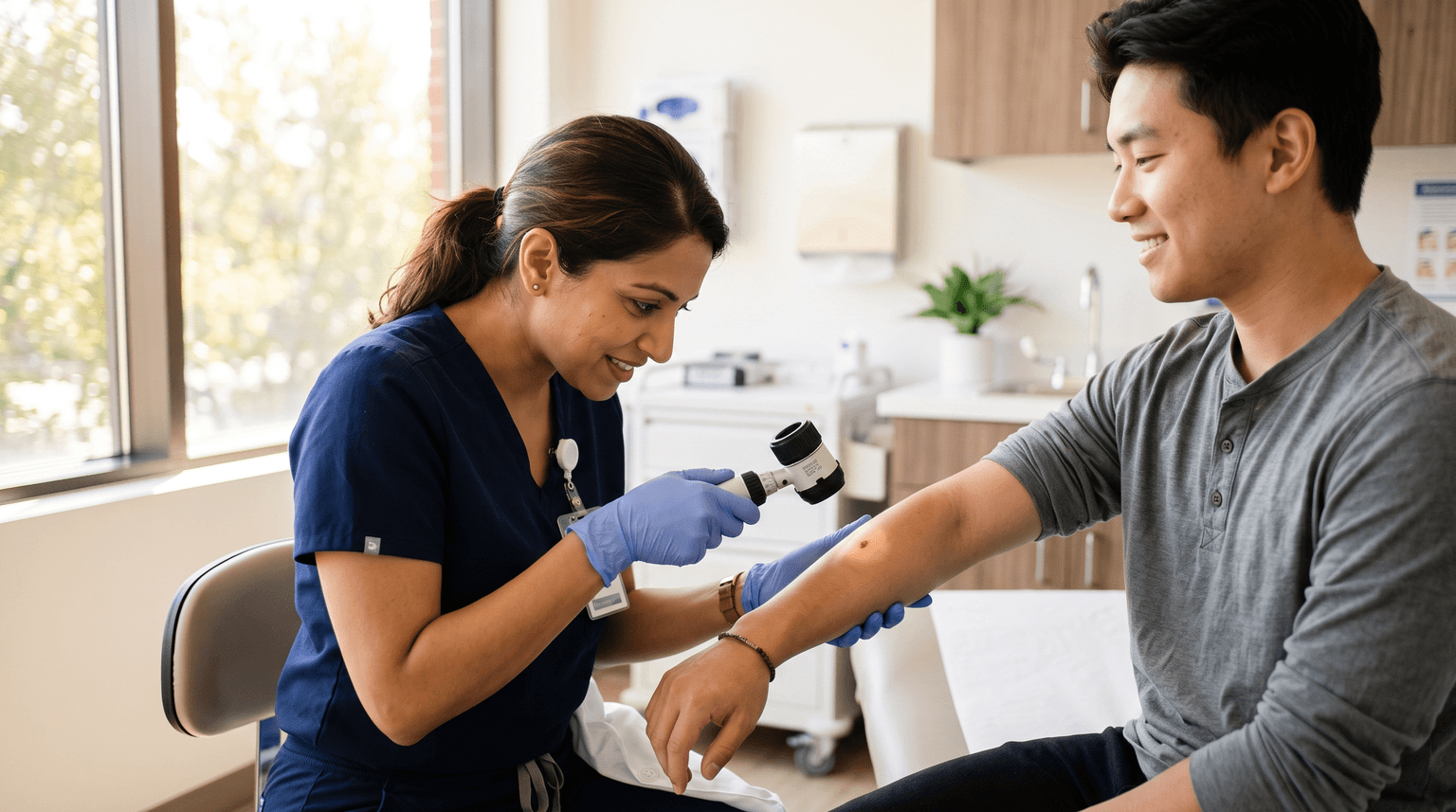
Dermatology
Skin, hair, and nail specialists for medical and cosmetic care.
When a skin problem is not an appointment
Most skin problems are not urgent, and a few are, so this comes first. Go to an emergency department for a red or painful area of skin that is spreading fast, for a rash with blistering or peeling skin along with a fever, or for skin pain that is far worse than the skin looks. That instruction is ours rather than any one source's, and we would rather label it than let it read as sourced. Your clinician is the right person to confirm that line.
What the sources say is worth reading alongside it. MedlinePlus describes necrotizing soft tissue infection as a rare but very severe bacterial infection that can destroy muscle, skin, and underlying tissue, developing after something as small as a cut or scrape. It says a small red painful lump or bump spreads, then a very painful bruise-like area develops and grows rapidly, sometimes in less than an hour, and that treatment is needed right away to prevent death. Its own routing instruction is to contact your provider right away if symptoms of infection occur around a skin injury, including drainage of pus or blood, fever, pain, redness, or swelling. On cellulitis, MedlinePlus lists fever with chills and sweating and skin redness or inflammation that gets bigger as the infection spreads among the symptoms, and routes anyone with symptoms of cellulitis to contacting their provider right away.
The blistering case has its own name. MedlinePlus describes Stevens-Johnson syndrome and toxic epidermal necrolysis as a severe skin reaction most often triggered by particular medications, which often begins with a fever and flu-like symptoms before the skin blisters and peels into very painful raw areas that resemble a severe hot-water burn. It says the condition also damages mucous membranes in most affected people, including the lining of the mouth and the airways, which can cause trouble swallowing and breathing, and that it often affects the eyes. It calls the disease life-threatening. None of these pages is a reason to spend time searching a directory.
What does a dermatologist do?
Dermatologists diagnose and treat conditions of the skin, hair, and nails: acne, eczema, psoriasis, suspicious moles, rashes, hair loss, and more. Many also offer cosmetic procedures such as laser treatment, fillers, and chemical peels, though insurance typically covers only medical visits.
Whether to have a baseline skin exam when you have no symptoms is less settled than it sounds. The US Preventive Services Task Force concluded in its April 2023 recommendation that the current evidence is insufficient to assess the balance of benefits and harms of visual skin examination by a clinician to screen for skin cancer in adolescents and adults, and it says clinicians should use their judgment when deciding whether to screen. It is explicit about who that does not cover: the recommendation does not apply to people with a personal or family history of skin cancer, and it does not apply to people with symptoms such as changes in the size, shape, or color of skin growths, or irregular moles. If you are in either of those groups, this is a conversation to have with a clinician rather than a question this page can answer.
One detail from the same Task Force summary is worth carrying, because it changes where people look. It says melanoma is about 30 times more common in White persons than in Black persons, that persons with darker skin color are often diagnosed at later stages when skin cancer is more difficult to treat, and that the most common type of melanoma among Black persons occurs mostly on skin not frequently exposed to direct sunlight, such as the palms of the hands, the soles of the feet, or under the fingernails or toenails.
When to see a dermatologist, and when your primary-care provider is enough
A primary-care provider is a reasonable place to start with a skin complaint, and whether it needs a specialist is a judgement for the clinician who sees it rather than one this page can make for you. What is worth taking to a dermatologist directly: a skin issue that is persistent or visibly changing, a new or growing mole, a sore that will not heal, or an irregular-looking lesion. Fast-spreading, febrile, or severely painful skin belongs in the first section of this page rather than this one.
Referral rules are set by your plan rather than by the dermatologist, so check your plan documents or call the number on your insurance card. The provider profiles below list accepted insurance so you can rule out mismatches before calling.
Find dermatology providers near you
Frequently asked
Which skin symptoms need emergency care?
Go to an emergency department for a red or painful area of skin that is spreading fast, for a rash with blistering or peeling skin along with a fever, or for skin pain that is far worse than the skin looks. That instruction is ours and is deliberately stricter than the sources, which route both necrotizing soft tissue infection and cellulitis to contacting your provider right away. Your clinician is the right person to confirm the stricter line. What the sources do say: MedlinePlus says a necrotizing soft tissue infection can produce a very painful bruise-like area that grows rapidly, sometimes in less than an hour, and that treatment is needed right away to prevent death; and it describes Stevens-Johnson syndrome and toxic epidermal necrolysis, which often begins with fever and flu-like symptoms before the skin blisters and peels, as life-threatening.
How often should I get a full-body skin check?
There is no single answer, and the national picture is genuinely unsettled. The US Preventive Services Task Force concluded in April 2023 that the current evidence is insufficient to assess the balance of benefits and harms of visual skin examination by a clinician to screen adolescents and adults who have no signs or symptoms, and it says clinicians should use their judgment. That recommendation does not apply to people with a personal or family history of skin cancer, or to anyone with symptoms such as a change in the size, shape, or color of a skin growth, or an irregular mole. So the honest answer is to raise it with a clinician who knows your history rather than to work from an interval.
Is a skin check covered by insurance?
Diagnostic visits and screening visits are not the same thing for billing purposes. Evaluating a suspicious mole or a rash is a diagnostic visit; a routine whole-body screening exam in someone with no symptoms is not, and coverage for it varies by plan and state. Purely cosmetic visits and elective procedures usually are not covered. Confirm with the practice and your insurer before booking.
Can a dermatologist treat hair loss?
Dermatologists evaluate the cause of hair loss and discuss the options, and some practices run a dedicated hair-loss clinic. What is on the table depends on the cause, so it is a conversation for the visit rather than something to settle from a listing.
Are you a dermatology practice?
Add your practice to ProviderQuoHealth and connect with patients actively searching for dermatology care. Free listings stay free.
About our medical review process
The editorial health content on this page was reviewed by Myra A. Jones BSN, RN, CCM, a registered nurse, for medical accuracy and adherence to current clinical standards as of August 24, 2026. Provider listings are directory data from the public NPPES registry and provider submissions; they are not part of clinical review. ProviderQuoHealth’s health content is reviewed by licensed healthcare professionals before publication and re-checked when the content materially changes.
Important: Not Medical Advice
This information is provided for general educational purposes only and is not a substitute for professional medical advice, diagnosis, or treatment. Always seek the advice of your physician or another qualified health provider with any questions you have about a medical condition. Never disregard professional medical advice, or delay seeking it, because of something you have read on ProviderQuoHealth. If you or someone you know is struggling or in crisis, call or text 988 to reach the 988 Suicide & Crisis Lifeline, available 24/7. If you think you may have a medical emergency, call your doctor or 911 immediately.